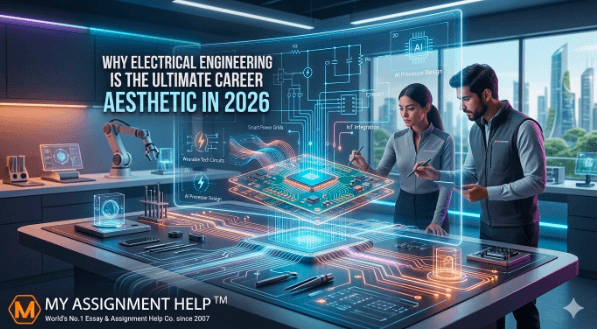
The definition of a “dream job” has undergone a radical transformation. In the early 2020s, the “aesthetic” was dominated by the remote software developer or the digital nomad. However, as we move through 2026, the cultural and economic pendulum has swung toward something more tangible, high-stakes, and essential. Enter Electrical Engineering (EE): the silent engine behind the AI revolution, the green energy transition, and the next frontier of space exploration.
Today, being an electrical engineer isn’t just a career choice; it is a lifestyle defined by technical mastery and planetary impact. From designing the neural processing units (NPUs) that power generative AI to architecting the smart grids that sustain our cities, EE has become the ultimate “career aesthetic” for those who want to build the future, not just live in it.
The Power Paradigm: Why EE Dominates 2026
The shift toward Electrical Engineering is driven by a convergence of three massive global trends: the Electrification of Everything, the Silicon Renaissance, and the urgent need for Sustainable Infrastructure. In the United States, the Bureau of Labor Statistics (BLS) and industry leaders have noted a surging demand for professionals who can manipulate electrons to solve 21st-century problems.
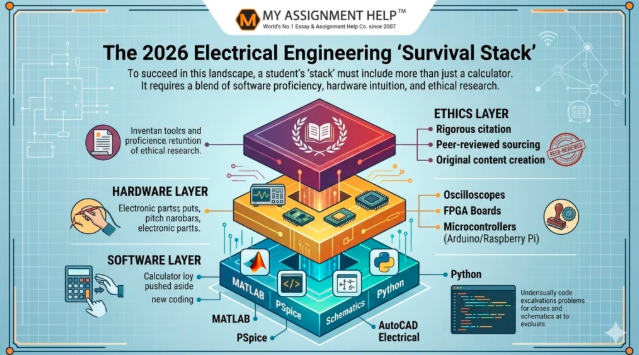
As the curriculum becomes more rigorous to keep pace with these innovations, the pressure on students has reached an all-time high. Navigating complex electromagnetic field theory or advanced VLSI design often requires more than just classroom lectures. This is why many top-tier students now rely on professional electrical engineering assignment help to bridge the gap between theoretical physics and practical application. By mastering these complexities early, students position themselves at the forefront of a job market that prizes precision and technical “fluency” above all else.
Data-Driven Insights: The ROI of an EE Degree
In 2026, the Return on Investment (ROI) for Electrical Engineering has outpaced many traditional “prestige” roles. According to recent labor market analytics, the median starting salary for EE graduates in tech hubs like Austin, Seattle, and Raleigh now rivals that of senior software roles, with the added benefit of higher job security due to the physical nature of the infrastructure.
Key Labor Statistics (2026 Projections):
- Median Annual Wage: Approximately $115,000 – $130,000 (US Average).
- Sector Growth: Semiconductors and Renewable Energy systems are seeing a 12% Year-over-Year increase in job postings.
- High-Demand States: California, Texas, and Massachusetts remain the primary hubs for R&D and hardware innovation.
However, the path to these high-paying roles is paved with intensive research and technical documentation. Maintaining academic integrity is paramount in this journey. Before submitting high-stakes research papers on semiconductor physics or power distribution, utilizing a reliable assignment plagiarism checker is a standard practice among US students to ensure their work remains original and meets the strict E-E-A-T (Experience, Expertise, Authoritativeness, and Trustworthiness) standards required by modern universities.
See also:Home Automation: Comfort Meets Technology
The Infrastructure of Innovation: 4 Pillars of the EE Aesthetic
1. The Silicon Architect (Semiconductors & AI)
In 2026, AI is no longer just “code.” It is hardware. The demand for engineers who can design energy-efficient chips to run Large Language Models (LLMs) locally on devices has created a new class of “Silicon Architects.” This role is the epitome of the EE aesthetic: clean-room environments, high-level logic, and the creation of physical intelligence.
2. The Grid Modernizer (Green Energy)
As the US pushes toward a carbon-neutral footprint, the traditional power grid is being replaced by “Smart Microgrids.” Electrical engineers are the vanguard of this transition, integrating solar, wind, and battery storage into a cohesive, self-healing system. It is a career that offers the unique “aesthetic” of environmental heroism paired with high-tech utility.
3. The Robotics & Automation Specialist
The 2026 labor market is characterized by human-robot collaboration. EE professionals are designing the sensors, actuators, and control systems that allow robots to navigate complex human environments. This niche blends mechanical intuition with electrical precision.
4. The Neural Link (Biomedical Engineering)
The intersection of EE and biology is perhaps the most futuristic aesthetic. Developing brain-computer interfaces (BCIs) and advanced prosthetics requires a deep understanding of bio-electronics, making this one of the most intellectually rewarding sub-sectors of the field.
Key Takeaways for Aspiring Engineers
- The Market is Physical: While software is crucial, the world is moving toward hardware-centric solutions for AI and Energy.
- Specialize Early: Whether it’s Photonics, Power Systems, or Telecommunications, niche expertise is the key to premium salaries.
- Integrity Matters: In a world of AI-generated content, original research verified by professional tools is the only way to build a credible professional reputation.
- Continuous Learning: The “NEC” (National Electrical Code) and IEEE standards evolve; staying updated is a career-long commitment.
FAQ Section
Q: Is Electrical Engineering harder than Computer Science in 2026?
A: “Hard” is subjective, but EE generally requires a deeper mastery of advanced mathematics and physical sciences (like Electromagnetism and Thermodynamics) compared to standard CS tracks.
Q: What is the most in-demand EE skill right now?
A: Mixed-signal circuit design and knowledge of Power Electronics for Electric Vehicles (EVs) are currently at the top of recruiter wishlists in the US.
Q: How do I ensure my engineering assignments meet academic standards?
A: Focus on data-driven analysis, follow the STAR method for project reports, and always use professional verification tools to ensure your technical writing is unique and well-cited.
Author Bio: Sarah Jenkins
Senior Academic Consultant & STEM Strategist at MyAssignmentHelp
Sarah Jenkins holds an M.S. in Electrical Engineering and has spent over a decade bridging the gap between industry requirements and academic excellence. Currently a lead strategist at MyAssignmentHelp, Sarah specializes in helping US-based students navigate the rigors of STEM education through expert-led guidance and technical mentorship. Her work focuses on implementing the E-E-A-T framework in academic writing, ensuring that the next generation of engineers is prepared for both the technical and ethical challenges of the 2026 labor market.
References & Data Sources
- U.S. Bureau of Labor Statistics (2025-2026 Outlook): Occupational Outlook Handbook for Electrical and Electronics Engineers.
- IEEE Spectrum (2026): “The State of the Silicon: Annual Semiconductor Industry Report.”
- National Center for Education Statistics (NCES): Trends in STEM degree ROI and graduation rates.
- Department of Energy (DOE) 2026 Report: “Smart Grid Evolution and the Future of the American Workforce.”